Quick Links: Talumpati | Licensed Librarians | Filipiniana Online | Stereotypes | Leadership | The Philippines

LLE 2005: Taking the Exam

The exam is already next week. If you don't know what to expect, check out "What not to expect in the LLE," where Peachy Limpin writes about what you can expect and shares what Perla Garcia, chair of the Board for Librarians, told her. If you missed all my other posts about the exam, here they are:

LLE 2005: Preparing for D-Day
LLE 2005: Studying for the Exam
LLE 2005: Applying in Person
Librarians' Licensure Examination 2005
You should also go over all the requirements and instructions for the exam days. Bring only what you're supposed to bring, wear what you're told to wear, and try to get a good night's sleep before the exam.

And finally, here's what you need to remember while taking the exam:

  1. Pay attention. Read, understand and follow all of the instructions. Listen to the proctor. No matter how unlikeable s/he may be, you're stuck with your proctor. Some will be very kind, while others will terrorize you. Don't let them affect you. Life is not fair. Get over it.
  2. Be careful. Once you get the answer sheets, check that you have all of them in the proper order, make sure you understand what you're supposed to write before you start writing, and think like the professional that you aspire to be.
  3. Systematize. Will you encircle your choices on the questionnaire first and mark your answer sheet later? Or will you mark your answer sheet after every question? Whatever you decide, remember that you can write on the questionnaire and that the number of the question you are answering should match the number on the answer sheet. Last year, I first answered all the questions I was confident about and marked those that I wasn't sure of—but always making sure that the numbers on the questionnaire and answer sheets matched. After the first pass, I went back to the ones I skipped and spent more time on the questions to which I didn't know the answer or which I thought were tricky.
  4. Pace yourself. When you receive the questionnaire for a particular test, take some time to look at all the pages first so that you have an idea of the kinds of questions you'll be encountering. Make sure you're done with your first pass at half-time. If not, then you're taking too long. Your objective is to answer all the easy questions first, then go back to the hard ones. Stop answering questions during the last five minutes, and start filling in the blank spaces on your answer sheet. Why? If you leave a space blank, you will definitely get a zero for that question. But if you guess blindly, then you will at least have a 25 percent chance of getting one more point.
  5. Don't fight the questions. Some questions will not make sense, but try to make sense out of them anyway. There will be occasions where a word seems to be missing (e.g., not) from the question; see if the choices support your hypothesis and act accordingly. If the question really does not make any sense, focus on the choices and play "spot the difference." You can prepare for these kinds of questions by going back to your mock exams and "playing" with the questions. If you change one word in the question, what will the answer be? If you disregard the questions, can you guess the correct answer just based on the choices?
  6. Finally, focus. This is the moment of truth. It doesn't matter anymore how much or how little time you spent preparing for this exam. This is not the time to torture yourself about the things you should or should not have done before the exam. After each test, try not to discuss the questions and/or answers with other examinees; this practice will only serve to distract you from the next test.
Good luck!


Category: Licensed Librarians

Read More...

Starstruck

TODAY’S JOKE: Sen. Lito Lapid returned a book to the Senate library. "Walang kwenta ito," he complained, "puro tao, walang istorya." [This is no good; all characters, no story.]

The librarian replied: "So kayo pala ang nag-uwi ng aming telephone directory." [So, you were the one who took home our telephone directory.]

—Neal H. Cruz, "Hey guys, what about the people?" (Philippine Daily Inquirer, 26 October 2005)
The joke may not be politically correct, but it's very Filipino and shows just how indispensable celebrities are in the Philippines. Lito Lapid, for those who don't know, was an action star before he ran for the Senate. The Senate librarian, of course, goes unnamed.

And in case you've ever wondered if any celebrities aside from Manuel Quezon III are blogging, the following, in alphabetical order, are the ones I know about:

Francis Magalona
In The Freeman Pages, the most famous Filipino rapper writes about his family, feelings, and the work he's doing. Check out his post on how he found out that he made it into an international hiphop book.
Luis Manzano
There is not much evidence that the owner of Lucky me......... is really Luis Manzano, the son of Vilma Santos and Edu Manzano. But who knows, maybe the man who is said to have asked his mother to stop calling him "Lucky" really likes writing poetry.
Jim Paredes
He became famous for being one-third of the Apo Hiking Society, but has also become known for his writing and photography. In Writing on Air, he talks about his work and personal life, and shares a lot of photos. On Jim's Multiply Site, he shares downloadable versions of his solo songs and videos.
Jessica Zafra
In Jessica Zafra's Twisted, the author says in her first post that, "Yes that IS my real name, I AM the columnist slash talk show host, I AM the author of the seven Twisted books (eight if you count Twisted Flicks) and this IS my first and only blog." She just started blogging this month.

Categories: The Philippines, Blogging

Read More...

Reading and Barangay Libraries

There are actually two stories in "Show kids you read, parents told" by DJ Yap (Philippine Daily Inquirer, 25 October 2005). The first story deals with how parents can encourage their kids to read by reading in front of them. I've said it before and I'll say it again, "the first step is to get people reading—anything—and then, hopefully, they will want to read more." The basis for the story was the four-day conference organized by Sa Aklat Sisikat (SAS) for public school teachers.

The second story involves the "GMA Modular Library program, which will triple the number of barangay libraries from 500 to 1,500 within the next two years." Yap refers to the fact that, "it has been 56 years since a municipal library law was enacted mandating the establishment of 1,000 libraries," but the more relevant law is actually Republic Act No. 7743, which provides for the establishment of "public libraries in every congressional district, city and municipality, and reading centers in every barangay throughout the Philippines." R.A. 7743 was enacted in 1994 and is "a classic example of a law that is good in paper but poor in implementation," according to a press release that quotes Senator Aquilino Pimentel.

Maybe Pimentel's comments did some good, but the inauguration of the GMA Modular Library program is good news, of course. However, I will wait until I see more concrete plans before I start jumping up and down. I am concerned about the fact that the word "librarian" is never mentioned in Yap's article, Pimentel's press release or the press release from the Office of the President. Politicians, contractors, and educators are mentioned prominently in all three, but the name of the one librarian mentioned in the press releases—Prudenciana Cruz, director of the National Library—is misspelled. It looks like these libraries are going to be built without any input from librarians.

Which brings me to the fact that people seem to think that a building with books is already a library. Who will organize the books? Who will train children to look for information using the computers? I'm happy that the government is finally turning its attention to libraries. I can only hope that librarians will be consulted in planning, building and managing these libraries. And maybe someday, librarians will also figure prominently in conferences that seek to promote reading.


Categories: Education, Libraries

Read More...

Online Newsletters

How will people find out what's happening at the library or what librarians are doing if we don't tell them about it? The following are published by libraries or library associations in the Philippines:

  • The Philippine Association of Academic and Research Librarians has an unnamed publication whose first issue goes back to 1999.
  • The De La Salle University Library has its Newsette, which is available in pdf format from September 2001 onward.
  • Aklatang Emilio Aguinaldo of De La Salle University-DasmariƱas publishes The Bookshelf. Some articles in its latest issue are available online, but all other issues since June 2004 are available as pdf files.
  • The University of the Philippines Library Science Alumni Association set up a blog, UPLSAA Online, as the first draft of its newsletter. (Disclosure: I am the editor of the online and offline versions of the newsletter.)
  • The Philippine Normal University Library and Information Science Alumni Association also blogs at PNU-LIS Updates.
  • Xavier School has its XS GS LRC Blog, which has a lot of photos.
  • And then there's the latest: the International Rice Research Institute Library's What's New at the IRRI Library, which is devoted to current awareness.
What's going on? Could it be that a trend is starting? Blogs are free and easier to update than regular websites. Keep your fingers crossed.


Category: Libraries

Read More...

FO: Pinoy Ako

"Pinoy Ako" is the theme song of "Pinoy Big Brother." But this post is about the song and not the show. Download the song at pinoy.rickey.org. I modified the lyrics I found at Lyrics! and provided a rough translation of the lyrics below for the benefit of those who can't understand Tagalog.

Some have suggested that the song was copied from another song. I don't mind. If you think about it, adapting (note: some will probably call it stealing) foreign originals is actually very Filipino. Pinoy ako!

Pinoy Ako
(Orange And Lemons)

Lahat tayo'y mayro'ng pagkakaiba
Sa tingin pa lang ay makikita na
Iba’t ibang kagustuhan
Ngunit isang patutunguhan

Gabay at pagmamahal ang hanap mo
Magbibigay ng halaga sa iyo
Nais mong ipakilala
Kung sino ka man talaga
Chorus:
Pinoy
Ikaw ay Pinoy
Ipakita sa mundo
Kung ano ang kaya mo

Ibang-iba ang Pinoy
Wag kang matatakot
Ipagmalaki mo
Pinoy ako, Pinoy tayo
'Pakita mo ang tunay at kung sino ka
Mayro’n mang masama at maganda
Wala namang perpekto
Basta magpakatotoo

Gabay at pagmamahal ang hanap mo
Magbibigay ng halaga sa iyo
Nais mong ipakilala
Kung sino ka man talaga [chorus]

Talagang ganyan ang buhay
Dapat ka nang masanay
Wala ring mangyayari
Kung laging nakikibagay

Ipakilala ang 'yong sarili
Ano man sa 'yo'y mangyayari
Ang lagi mong iisipin
Kayang kayang gawin [chorus]
All of us are different
One look and it's obvious
We like different things
But share similar objectives

You're looking for guidance and love
For what will give meaning to you
You want to let people know
Who you really are
Chorus:
Pinoy
You are Pinoy
Show the world
What you can do

The Pinoy is very different
Don't be afraid
Be proud
I am Pinoy, we are Pinoy
Show the truth and who you are
Both the good and the bad
No one's perfect
Just be true to yourself

You're looking for guidance and love
For what will give meaning to you
You want to let people know
Who you really are [chorus]

That's what life is like
Get used to it
Nothing will happen
If you always try to please

Introduce yourself
Whatever will happen to you
Always keep in mind
That you can do it [chorus]


Category: Filipiniana Online

Read More...

LLE 2005: Preparing for D-Day

D-Day for those taking the Librarians' Licensure Examination this year will be on Thursday and Friday, November 3-4. If you have not yet begun reviewing for the exam, you still have a few weeks. It's also time to start preparing for the day itself.

Pay attention. The deadline for submission of applications has already passed. You should have all the necessary papers by now. Make sure you read, understand and follow all of the instructions.

Plan ahead. If you can go on leave from work during the week of the exams, do so. (This should be easy because only November 2 and 3 are working days during that week. But I'm not sure if the declaration of November 4 as a holiday will have any effect on the exam.) If you can pass on your household responsibilities to your husband/wife, parents, children, or friends during that week, start making arrangements now. It will be much better if you are not worrying about other things a few days before or, worse, during the exam. And if you can afford to celebrate after the exam, start making plans to go out of town for a few days.

Getting there. The venue will be announced just a few days before the exam. Make sure you are able to find out as soon as possible. Visit the venue before the first day of the exam. Figure out how to get there and how long it will take. If you plan to take public transportation, find out all the possible routes you can take. If you're bringing a car, look around to see where you can park. If you want someone to drive for you, let them know now. Finally, assume that something will go wrong, so prepare backup plans in case your car won't start, there's a rally somewhere, or you wake up late.

Stay healthy. Remember to eat. Not just on the exam days, but also while you're studying. It's very hard to think on an empty stomach. And get some exercise. Studying for many hours without stopping will be counter-productive. Get up after an hour and walk around a little. Better yet, play badminton, go to an aerobics class or swim every other day. Are you the type who gets sick when something important is coming? You better visit a doctor soon.


Category: Licensed Librarians

Read More...

Preserving Our Cultural Heritage

The International Conference on Challenges in Preserving and Managing Cultural Heritage Resources, organized by the Rizal Library in cooperation with the National Commission for Culture and the Arts (NCCA) and held at the Ateneo de Manila University from 19-20 October 2005, was very enlightening. Below are my notes on some of the more interesting sessions.

Ambeth Ocampo, director of the National Historical Institute and chair of NCCA, spoke about the need to help Filipinos appreciate culture; otherwise, we may not have anything to preserve. No copies of Ocampo's keynote address were given out, but most of what he said appeared in his two most recent columns in the Philippine Daily Inquirer (see "Lack of appreciation for our heritage" and "More Halloween stories on heritage").

Stephen Maxner (Vietnam Archive) shared his experience on the development of the Virtual Vietnam Archive, the technical requirements of their digital library and the importance of taking care of donor relationships. Jose Ignacio (UP Environmental Architecture Lab) showed photos and videos of the stone houses in Batanes, and discussed plans for their restoration.

Teresa Montesa (Asian Development Bank) emphasized the need to identify archival records at the point of creation—and not when these have already deteriorated—while Mages Periasamy (National Library Board, Singapore) pointed out the need to start thinking about preservation at the point of creation. Heather Brown (State Library of South Australia) recommended adoption of the hybrid option—microfilming for posterity and digitizing for accessibility—and referred to the machine that Montesa had described earlier, which microfilms and digitizes at the same time. Brown also spoke about the hands-on preservation classes her library has conducted for children.

Khaw Lake Tee (University of Malaya) distinguished between economic rights (copyright-holder) and moral rights (author)—because authors do not always own the copyrights to their works—and ended up getting asked so many questions that the organizers had to do away with questions for the other speakers. Fe Angela Verzosa (De La Salle University) would have won the Most Entertaining Speaker Award, if one had been given. Verzosa, for instance, referred to documents created with computers as "born digital," and those that need to be converted to digital form as "born again." She also said that Internet users are now looking for full text, rather than catalog or bibliographic information. Amen.

Chuck Sutyla (Lord Cultural Resources Planning and Management) talked about the blurring of boundaries between libraries, museums and archives, and how those in charge should plan for users and not just collections. Yuki Nagano (International Christian University, Japan) showed a video of her library's automated storage system and presented evidence that the system enhanced productivity, expanded storage capacity and will eventually save money for the library.

And then there was the poster presentation by Richard Ragodon on Filipiniana book jackets. I hope this one gets published somewhere.

Overall, the conference was very well organized and the speakers were well-chosen. I just wish that some of the finer details—like reminding participants to put their phones on silent mode or that those who want to ask questions should remember that they are not speakers—were also paid some attention.


Category: The Philippines

Read More...

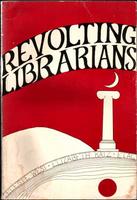
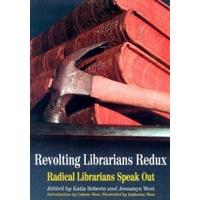
Revolting Librarians

Revolting Librarians Revolting Librarians Redux

Thanks to Owen Massey, we can now read most of the out-of-print Revolting Librarians online. The newer Revolting Librarians Redux is on my wish list.

But what exactly is a revolting librarian? The word "revolt" can mean "to rebel." It can also mean "to repel." The former wants to change things, the latter is offensive. Both are represented in Revolting Librarians.


Category: Stereotypes

Read More...

FO: Journals

Updated on 13 January 2006 to include the Journal of Asian Missions.

Updated on 6 November 2005 to include the following: International Online Journal of Science and Mathematics Education, International Rice Research Notes, Philippine Journal of Internal Medicine, PJRReports.
In "Directory of Open Access Journals" (DOAJ), I promised to feature Filipino journals. The following are not all necessarily "open access" as defined by DOAJ, but articles are available for free. If you are interested in reading the journals with "(pdf)" after their titles, you will need to download a free Adobe Reader. Unless otherwise stated, journals are available in print.


Acta Medica Philippina (pdf)
As the title implies, this is a Filipino medical journal. Articles published by the UP College of Medicine from 1993 to 2001 are available.
Asian Development Review (pdf)
It is not, strictly speaking, a Filipino journal because it is published by the Asian Development Bank (ADB). However, I have included it in this list since it is published by an institution based in Manila. Articles containing the results of economic and development research carried out by ADB are available from 1997 onward.
East Asian Pastoral Review
Published by the East Asian Pastoral Institute, this theological journal features articles from 1994 to the present. Roman Catholic teachings are emphasized but other Asian religions are represented as well.
International Online Journal of Science and Mathematics Education
The National Institute for Science and Mathematics Education Development of the University of the Philippines (UP) publishes this journal exclusively on the Internet. The first issue was published in 2001. Please note that UP's server is not always reliable, so if you are not able to access an issue, keep on trying =)
International Rice Research Notes (pdf)
Like the Asian Development Review, it is not, strictly speaking, a Filipino journal, but it is included in this list because the International Rice Research Institute is based in the Philippines. Each issue from 1998 onward is available online.
Journal of Asian Missions (pdf)
The journal is published by the Asia Graduate School of Theology-Philippines. All issues and articles, including editorials and book reviews are available online from the first volume in 1999 to March 2005. Filipino Christians who do not happen to be Catholic will probably appreciate this journal more than the majority of Filipinos, who are predominantly Catholic.
Kritika Kultura (pdf)
This electronic journal (no print counterpart) is published by the Ateneo de Manila University's English Department. Articles on language and literary/cultural studies in the Philippines from 2003 to the present are available.
Literatura
According to its website, it is "an online monthly literary magazine dedicated to Philippine fiction, poetry, creative non-fiction, and literary criticism." Eleven issues have been published, but only the full text of the last three issues are available at this time. If you can't access the site (due to limits imposed by GeoCities on sites it hosts for free), try again after an hour. It is not available in print.
Philippine Journal of Development (pdf)
Formerly the Journal of Philippine Development, this journal published by the Philippine Institute for Development Studies has tables of contents from 1974 and full text from 1981-2001. It contains articles on Philippine development, sectoral policy concerns in various countries and development issues in general.
Philippine Journal of Internal Medicine (pdf)
This bimonthly journal is published by the Philippine College of Physicians. Individual articles are available from 2003 onward.
Philippine Journal of Microbiology and Infectious Diseases (pdf)
Articles published by the Philippine Society for Microbiology and Infectious Diseases from 1972 to the present may be viewed, but a few issues from the 1970s and 1980s are not available.
PJRReports
This publication of the Center for Media Freedom & Responsibility is not, strictly speaking, a journal in the conventional sense (i.e., scholarly). But since its articles are written by journalists for fellow journalists, it is used as a reference in journalism classes, and it is not merely a newsletter, I believe it belongs on this list. The first issue appeared in January 2005, but only articles from the March 2005 issue onward are available online. The September-October 2005 issue is in pdf format. Only selected articles are available from each issue. Tip: If there are no text links, click on the covers.

Category: Filipiniana Online, Technical Services

Read More...

Dying for a Book

In third-world countries... bribery was a way of life. If you wanted to do business in Mexico, it was grease that got you through the doors. You could play the same game in the Philippines, as long as you played by the Filipino rule book.
Booked to Die and The Bookman's Wake are the first two books in John Dunning's series of Cliff Janeway novels. The quote above is from The Bookman's Wake (New York: Pocket Star, 1996), p. 350. It's possible that some Filipinos will be offended by the quote, but on the same day that I finished The Bookman's Wake, the person who sold me the computer that I'm using now gave me an overview of how some Internet cafes bribe their way to profitability, so I'd say that Dunning is pretty much right. Oh, and yes, I'll be blogging more regularly now =)

Back to the books. I bought both of them for a total of 227 pesos at Books for Less on Roces Avenue. The books are so good that I finished them in less than three days. These mysteries, however, are not for everyone. Aside from the murders, there are, of course, lots of book collecting trivia and literary allusions, not to mention a character driven to a killing spree because of a spelling error! And I thought I had a bad case of editor-itis.

By the way, please let me know if you have a copy of "the Filipino rule book" that Dunning refers to in the quote above. Let's make copies for all the bewildered foreigners and law-abiding Filipinos who can't understand how business should be done in the Philippines. I'm sure many are dying to get their hands on such a book.


Category: Books and Movies

Read More...

Related Posts Plugin for WordPress, Blogger...