Quick Links: Talumpati | Licensed Librarians | Filipiniana Online | Stereotypes | Leadership | The Philippines

Outstanding Librarian 2004:
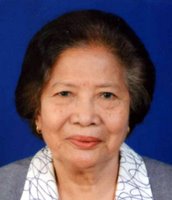
Susima L. Gonzales

Susima L. GonzalesSusima L. Gonzales
Former Chairperson
Board for Librarians

The Professional Regulation Commission conferred the Outstanding Professional Librarian of the Year Award on Susima L. Gonzales in 2004. The citation reads:

For her unwavering commitment to the advancement of the Library Science profession as evidenced by her efforts for the passage of Republic Act No. 6966 or the Philippine Librarianship Act and Republic Act No. 9246 entitled "Modernizing the Practice of Librarianship in the Philippines"; for spearheading the establishment and formulation of standards and guidelines for the teaching of Bachelor of Library [and] Information Science (BLIS) Program; for her professional competence and unquestioned integrity as Chairperson of the Board for Librarians and Chief of Legal Documentation and Library Services Division of the Department of Justice; and for her exemplary leadership in holding key positions in various national organizations of librarians.

Thanks to Lilia Echiverri for providing the photo and citation.


Category: Librarians—Awardees

Read More...

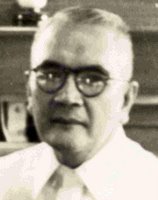
Who is Gabriel A. Bernardo?

Gabriel A. BernardoEvery year, the Institute of Library and Information Science presents the Gabriel A. Bernardo Memorial Lecture around March 14, the birthday of the person after whom the lecture is named. This year, the speaker will be USec Fortunato dela Peña of the Department of Science and Technology. For more information, check out UPLSAA Online.

But who exactly is Gabriel A. Bernardo? For those who are familiar with his name, all we ever really hear is that he is the doyen of Philippine librarianship. For those who've never heard of him, below are two articles that appeared in the Manila Times in 1962. The first was written by Alfredo Roces before Bernardo's death, while the second is an editorial—probably the source of the title "doyen"—published after his death on 5 December 1962. [Digression: When will another editorial be written about a Filipino librarian?]


Our Dean of Librarians
by Alfredo R. Roces
Manila Times, 27 November 1962


National Book Week should be the appropriate time to bring to public light a man, and more important, his contributions to Philippine library science. This man is little known outside of his circle of libraries, book lovers, students of UP and the Ateneo. In fact, we have never met him personally. But this man, Gabriel Bernardo, is considered the "dean of Filipino librarians" by all those who live in the field.

Bernardo is now about 71 years old. At present he is recovering from an operation, his ailment forcing an interruption of his teaching at the Ateneo where he was pinch-hitting for Fr. Horacio de la Costa's history and government class. Throughout his life he has expressed scholarly interest in books, Philippine and Indonesian folklure (sic), Tagalog, and culture in general. He has trained countless Filipino librarians and written many articles on various aspects of Philippine culture. He was librarian and professor emeritus at the UP. In 1957, he received a citation from the UP Library Science Alumni Association and library staff members as "Dean of Filipino Librarians, Educator, Bibliographer and Scholar."

During the American regime, Leonard Wood offered Bernardo the directorship of the National Library, but Bernardo turned it down because he could not be assured a free hand in weeding out incompetents. Till now the graying librarian is highly respected, but not popular for his highly principled and idealistic standards imposed on those under his influence. He has, for instance, many a time refused to recommend someone for a position whenever he felt that the candidate was unqualified. On the other hand, he has been known to work very hard to help someone obtain an opportunity whenever he was confident of the person's qualifications. In public libraries, where bureaucracy reigns, such uncompromising individuals are seldom popular.

In one school in the United States, where a Filipino pensionado was sent and had done so badly the school crossed out Filipinos from the list, Bernardo worked tirelessly among those he knew in the American community and wrote letters to the school officials in order to recommend someone he knew was deserving. The person was accepted and has at least vindicated Philippine scholarship in that school.

Bernardo helped organize the USIS library. He is working on a national bibliography, stung by the unchallenged cry of Retana: "Where are the people aspiring to be free, but need a foreigner to make its national bibliography?" He is a serious researcher and has done much for library work in this country and, consequently, for the seeds of culture.

We feel that humble, hard-working and dedicated men need some token of the public's esteem. In this era of public relations and image-building through press release, a man of Bernardo's achievement deserves some recognition. Roses to the dean of Filipino librarians on Book Week!


Professor Bernardo
Manila Times, 7 December 1962


An unassuming man, whose quiet manner belied his erudition, was one of the most beloved figures in the University of the Philippines in his time. He was Professor Gabriel A. Bernardo, doyen of Filipino librarians, who died the other day at the age of 71, poor of purse but rich in honors.

Known to all students as the UP librarian, Dr. Bernardo was actually an eminent bibliographer of Filipiniana and an internationally recognized authority of Philippine and Indonesian folklore. Upon his retirement from the state university five years ago, he devoted his remaining years to the completion of his lifetime project, the updating of Philippine bibliography where W.E. Retana, James Alexander Robertson and others had left it half a century ago.

A conscientious and devoted scholar, Dr. Bernardo was no less revered as an understanding and helpful friend of every student in quest of knowledge from the books and manuscripts in his care. He was a true man of learning, whom neither adversity nor academic renown could distract from his scholarly devotions.


These two articles were reprinted in Gabriel A. Bernardo: Librarian, Bibliographer and Scholar (Manila: Bibliographical Society of the Philippines, 1974), which was edited by Mauro Garcia and includes Bernardo's works (including a play!) and testimonials delivered in his honor.


Category: Librarians

Read More...

"I'm Just Trying to Matter"

Every now and then, I ask myself, "Why am I doing what I'm doing?" I wasn't really thinking of this question while I was watching the Oscars, but after hearing Reese Witherspoon quote June Carter, I thought now might be a good time to reflect a little, especially after a year of blogging.

Why exactly am I blogging? And why do I continue to blog? Like Reese Witherspoon and June Carter, I guess I'm just trying to matter. The answers that I'm able to provide through this blog to questions that aren't really asked—it's more like anticipating what regular readers or Googlers might need—may not really matter in the greater scheme of things, but hey, not all of us can be heroes.

I'm just trying to matter. And the small change, I hope, will eventually add up to something more.


Category: About Vonjobi

Read More...

Edsa 20/20: Download the Documentary

Last February 20, Newsstand announced that, "we are working on making it available on the Internet very soon."

"It" was a documentary on the 1986 Edsa Revolution. Well, thanks to technological advances in the last twenty years—and the generosity of INQ7—anyone from anywhere around the world can now download EDSA 20: Isang Larawan.


Category: The Philippines

Read More...

Edsa 20/20: Fatigues

Twenty years ago, it all started with men in fatigues. Now, Filipinos are wearing all sorts of fatigues—people power fatigue, coup fatigue, etc. Scott Garceau explains it all in "Coup season," which I am reproducing below because the Philippine Star's archives are anything but reliable.


Coup season
by Scott R. Garceau
Philippine Star, 5 March 2006


I’m almost grateful for coup attempts, believe it or not. It seems to be the only time of the year that I can rely on getting a phone call from one or both of my parents back in the States.

Don’t get me wrong. It’s not that they don’t think about me and our little family halfway around the world during other times of the year. It’s just that nothing motivates them to pick up the phone quite like CNN footage of coup attempts back in Manila. That gets them all worked up.

"We were worried about you," begins the usual message from my mom on the answering machine. There’s always a faint, deprecating "tsk, tsk" undertone to this message. As in: "What are you doing in such a dangerous place?"

"Are you still there?" my mother’s voice asks. "Have you packed your bags? Is everyone safe?"

How to tell my parents that this coup stuff has now become blasé and routine, especially from the perspective of a daily newspaper desk? We’ve been down this road before, too many times. First there was people power fatigue. Soon after, we all came down with coup fatigue.

My mom’s phone message last Sunday carried that usual worried tone, as though we were sitting on a powder keg over here. How to tell that, on the day of the big "coup," my wife was getting a spa treatment in Makati, while her sister and relatives visiting from the US were shopping and hanging out at a local Internet café?

Coup? What coup?

But Mom had seen that alarming footage – you know, the usual tight close-up shot of a "crowd" that actually consists of about 300 people and gets aired on CNN worldwide every 30 minutes. She thought this meant the government had already collapsed, that the power lines had been cut, that the US embassy was being stormed. I tried to explain: the government is not collapsing, it’s just in a perpetual state of recovery. Like an alcoholic.

Really, I told her later when I returned the phone call, there were more people hanging out in the malls than taking to the streets. So chill-ax! (God, I hate using Gen-Y terms like that, but it was the only way to get through to her.)

When I called my mom back, I was tempted to slip on the Apocalypse Now or Platoon DVD in the background – something with a lot of gunfire and noise, to maybe make her think the AFP was right outside the door. But she’s older now, and there’s no good reason to get her all riled up.

Instead, I told her things were okay, not to worry, and gave her a pleasant update on the everyday surreality of living in Manila. No, nobody really knows what’s going on. And we’re completely used to that.

I pointed out that they were still airing those kitschy dance shows on noontime television. Now how could there be a coup (or media crackdown) when people were still practicing their dance routines?

Then my mom said that she had a "goody package" she wanted to send over to us, but with all the current "trouble," she wasn’t sure where to send it. "Is it still called the Philippines?" she asked. "Is it still the same address?" I could tell she was half serious. She said she wasn’t sure whether the Philippines had been taken over by Malaysia, or some other country. "No, that’s called a war, Mom," I explained. "This is a coup." I tried to clarify the difference between a "war" and a "coup." I think she finally got it.

(The kicker was, she had been promising to send this alleged "goody package" to us for half a year already. I guess the CNN footage provided another excuse for not driving down to the post office.)

Anyway, it was nice to hear from my parents. I think the last time they got worried enough to call was 2001, what with EDSA 2 and everything. Before that, it was the Abu Sayyaf and their American hostage shopping spree. For some reason, simple natural and man-made disasters – like the Leyte landslide, or ferry sinkings – don’t seem to prompt them to call. I guess it’s because I usually tell them those things are happening elsewhere, not in Manila.

But CNN packs a lot of clout. Global cable news may be a great idea, but it doesn’t always give a clear picture of what’s happening across the world. I’ve tried keeping my family in the loop with e-mail, but my parents regard e-mail with suspicion if not incomprehension, so I don’t contact them as much as I’d like.

Really, I guess it all comes down to seasons. Ecclesiastes, and all that. People here like to say there are only two seasons in the Philippines – hot season and rainy season. But I would have to add, just for the concerned or casual observer, one other period of local disturbance: coup season.

The only problem is, these days, coup season seems to be year-round.


Category: The Philippines
Read More...

Fearless Oscar Forecast

Best Picture
Brokeback Mountain

Best Actor
Phillip Seymour Hoffman (Capote)

Best Actress
Reese Witherspoon (Walk the Line)

Best Supporting Actor
George Clooney (Syriana)

Best Supporting Actress
Michelle Williams (Brokeback Mountain)

Best Director
Ang Lee (Brokeback Mountain)

Best Adapted Screenplay
Larry McMurtry & Diana Ossana (Brokeback Mountain)

Best Original Screenplay
Paul Haggis & Bobby Moresco (Crash)

See disclaimers here. And for those of you who are interested in reading the short story "Brokeback Mountain" by Annie Proulx, the link is here. But it looks like you'll have to click on the cached page because the original link is not working.


Categories: Books and Movies, About Vonjobi

Read More...

Edsa 20/20: The First Few Hours on Radio Veritas

TWENTY years ago, Filipinos did not have access to breaking news the way they do today. There were no cellular phones on which to receive hourly updates. There were no computers on which to check news sites or blogs. All they had were the print-only newspapers and the radio and television stations, most of which were either government-owned or censoring themselves for fear of reprisals.

And so, on the evening of February 22, 1986, when Juan Ponce Enrile and Fidel V. Ramos announced that they were withdrawing their support for President Ferdinand Marcos, Radio Veritas was one of the very few reliable sources for breaking news — perhaps the only one.

What was it like during the early hours of the birth of the Edsa Revolution? Thanks to Champ Reyes — whose father, Wency Reyes, was one of those who asked people to go to Edsa — we have a recording of the Radio Veritas broadcast on that historic night.

Download the entire recording here or listen to the following excerpts:

Read entire post...

This post was written for Inside PCIJ.


Categories: The Philippines, Filipiniana Online

Read More...

Edsa 20/20: Ang Paraisong Pinaka

Ang Paraisong PinakaThe Haribon Foundation began its "Ang Paraisong Pinaka" ad campaign last year. Its message about the Philippine environment and how our country's wildlife is one the most diverse—and endangered—moved me to write to Haribon to ask whether they were going to put the ads I heard on the radio on their website. Well, the ads were made available recently and you may now listen to the radio plugs.

The fact that the ads were uploaded at this time led me to reflect that "Ang Paraisong Pinaka" applies not just to our physical environment, but also our political development. The best translation of "Ang Paraisong Pinaka" I can come up with, apologies to John Milton, is "Paradise Most."

But I made a promise not to write about politics anymore, so let me just share with you my transcription and translation of "Ang Paraisong Pinaka":


Ang Paraisong Pinaka

Minsan, may isang paraiso: ang paraisong Pinaka

Ito ang pinakamayamang paraiso
Nandito ang pinakamalaki at pinakamaliit na isda sa buong mundo
Ang pinakamaraming uri ng ibon at paru-paro
Pinakamalaking paniki at agila
Pinakamalaki at pinakamaliit na kabibe
Pati na rin ang isa sa pinakamalaking bulaklak

Pero ang pinakamalungkot sa lahat
Ang buhay sa paraisong Pinaka
Ay siya ring pinakananganganib sa buong mundo

Kaya sa pinakamadaling panahon
Alagaan natin ang buhay dito sa Pilipinas
Ang ating paraisong Pinaka


Paradise Most

Once, there was a paradise: paradise Most

It is the richest paradise
Here we have the largest and smallest fish in the world
The most kinds of birds and butterflies
The largest bat and eagle
The largest and smallest shell
It also has one of the largest flowers

But the saddest of all
Life in paradise Most
Is also one of the most endangered in the world

And so, at the soonest possible time
Let us preserve life in the Philippines
Our very own paradise Most


Categories: The Philippines, Filipiniana Online

Read More...

Blogs as Filipiniana, Part I

In "The Pinoy A-list," I asked, what makes a blog "Pinoy"? Some suggestions have been made through the comments on my post, Random Takes and Ambot Ah! I'd like to suggest the following definition of a "Pinoy" blog based on the definition I use for my "Filipiniana Online" series:

Blogs about the Philippines, produced in or outside the Philippines, by Filipinos or non-Filipinos, in any of the Philippine languages, or in a foreign language (Medina 1992).
After all, if Jose Rizal, Ramon Magsaysay and Jessica Hagedorn had blogged in their youth—no matter what they wrote about—I'm sure we would all still recognize their work as Filipiniana. Another way of stating the definition would be:
Blogs about the Philippines. It doesn't matter whether the blogs were produced in or outside the Philippines, by Filipinos or non-Filipinos, in any of the Philippine languages, or in a foreign language, as long as they are about the Philippines.
What about Filipinos who do not write explicitly about the Philippines? As long as they acknowledge their Filipino roots, I'd consider them Pinoy blogs. Even those writing about not-so-Filipino topics like technology matters or American Idol, will do so with a recognizable Filipino perspective, no matter how subtle.

I am, of course, a librarian. How do I now "collect" all of these blogs in my "library"? I will now have to come up with a collection development policy. Give me a few days—maybe weeks—to come up with "Blogs as Filipiniana, Part II." In the meantime, suggestions, comments and feedback will be very welcome.


Categories: Blogging, Filipiniana Online

Read More...

Confluence of Events

Today is Ash Wednesday, the first day of Lent, and the first day of Women's Month and Fire Prevention Month. Can someone please explain the significance of this confluence of events? Are we supposed to fast because the women of this country (e.g., Gloria, Cory, Susan) are lighting too many fires? =)


Category: Events

Read More...

Related Posts Plugin for WordPress, Blogger...