Quick Links: Talumpati | Licensed Librarians | Filipiniana Online | Stereotypes | Leadership | The Philippines

Jose Llana: Filipino

Jose Llana: Filipino
A year after I watched The 25th Annual Putnam County Spelling Bee, I was finally able to talk to Jose Llana, the best-known Filipino male actor on Broadway today. Unlike my previous post on Lea Salonga, I actually sat down with and interviewed Jose. But that will have to wait for later. In the meantime, check out his resume, credits and the following stories about him:

"Spotlight on Jose Llana" by Ed Feldman (Talkin' Broadway)
Review of Jose by Rob Lester (Talkin' Broadway)
"Jose Llana stands out in 'Spelling Bee'" by Janet Nepales (Philippine News, 29 November 2005)
By the way, if you happen to want to perform on Broadway, Jose is also part of the faculty of Making It On Broadway, "a professional training program for anyone interested in pursuing a career in theater or eventually, Broadway."


Photo: Tim Schulteis Photography

Read More...

Pinoy Top Blogs: Two Years Old

Two years ago, Abe Olandres launched Pinoy Top Blogs (PTB). One year later, I started a first-anniversary series on the Top 50 Pinoy blogs, and continued monitoring the Top 50 every month thereafter. For the second anniversary, I will put together the data from June 2006 to June 2007 as a means to document developments that have taken place in the Pinoy blogosphere—insofar as the PTB Top 50 is a reflection of the Pinoy blogosphere—during the past year.

The data to be used in this second-anniversary series will be taken from the following posts:

Read More...

Lea Salonga: Filipina

Lea Salonga: Filipina
Aside from being the best known Filipina performing on Broadway today, Lea Salonga is also a sexy mom. And in case you didn't know, she's also on Friendster, MySpace and Multiply. Plus, she blogs, too! Read about how she prepares to go onstage in "My Pre-show" and what she thinks about people who think they can record performances without anyone noticing in "Say Cheese... NOT!!!"

When I first saw Les Miserables in 1994, I think I must have been jetlagged because I distinctly recall feeling sleepy. But I was very much awake this time, especially because I've never had the chance to see Lea perform live in a musical before. So awake, in fact, that I even saw her in some crowd scenes after Fantine's death, even though she mostly kept her back to the audience and had dark makeup on her face to, I suppose, look more masculine. Anyway, Lea was excellent as Fantine, especially when she sang "I Dreamed a Dream," parts of which are shown in the video below.


And, of course, she was very accommodating when I took her photo after the show, the same way she dealt with everyone outside the stage door, most of whom were waiting for her.

The following isn't quite about Lea anymore, but since I don't think I'll be doing a separate post on Les Miserables, let me just say that having a student ID once again makes it easier to get cheap tickets. The seats I got for Rickey and myself weren't so good—we were lucky if we could see performers' legs when they were on top of the barricades—but considering that I paid $26.50 for a ticket that normally sells for $111.50, I guess I really shouldn't complain =)

Read More...

I Luv New York 2007


Well, I'm back in New York City. I blogged about my adventures quite a bit last year, including a series on Broadway musicals, and this year won't be very different. Consider yourself warned =)

But I'll also be blogging about other things—especially stuff I should've posted a long time ago. So it's very possible that there will be at least two posts for the next few days... IF I can squeeze it in.

And just in case you're wondering about the "2007" in the post title, that doesn't mean I'll be here every year. But I suspect that this won't be the last time I'll be here.

Read More...

Librarian Stereotypes and the New York Times

From "A Hipper Crowd of Shushers" by Kara Jesella (New York Times, 8 July 2007):

Librarians? Aren’t they supposed to be bespectacled women with a love of classic books and a perpetual annoyance with talkative patrons — the ultimate humorless shushers?

Not any more. With so much of the job involving technology and with a focus now on finding and sharing information beyond just what is available in books, a new type of librarian is emerging...
Stereotypes will always be with us. And so, when the most e-mailed and 5th most blogged article on the New York Times is criticized by some librarians for trying to counter the prevailing librarian stereotype, it seems to me that this reflects a desire to deny the realities of the world in which we live.

The article may not reflect the truth that "hip" librarians have been around for ages—perhaps more at certain times, and less at others—but how exactly do you try and replace a stereotype without presenting another image to take its place? Since the article is not, in fact, a scholarly piece of research, is it fair to expect it to be more than what it is? The article was written for readers who probably haven't met a librarian in many years, and most likely share the stereotype referred to in the article. So if any of the non-librarians who read the article begin to think that they need to revise their image of librarians, then I think it has served its purpose.

We can't force people to perceive us differently overnight. The way to go, in my opinion, is to accept it and build on it. The criticism of the article reminds me of the Church's response to The Da Vinci Code. It's not quite on the same level, but instead of condemning the article, it would probably be more productive to use it as a springboard for discussion. As I've written before:
We can't just leave it to others to tell the people who we are; that's why the stereotypes about librarians continue to flourish. We have to be the ones to go out there and tell people who we are. It's not enough to complain about inaccurate images of librarians; we must be able to present alternative, positive images in movies, books and, yes, blogs =)

Read More...

Outstanding Librarian 2007:
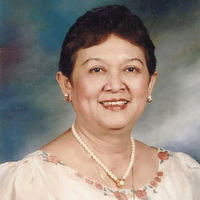
Prudenciana C. Cruz

Prudenciana C. CruzPrudenciana C. Cruz
Director
National Library of the Philippines

The Professional Regulation Commission conferred the Outstanding Professional Librarian of the Year Award on Prudenciana C. Cruz in 2007. The citation reads:

For exemplary dedication, competence and integrity in the practice of her profession which earned her prestigious awards such as, the Ten Outstanding Boholanos in the Whole World and the Philippine Librarians Association, Inc. (PLAI) Service Award in 2006, the 2005 ADOC Award for the Best e-Practices in Taipei and the Hall of Fame Award by the PLAI in 2004 among others; for her outstanding innovations and modern contributions as Director of the National Library of the Philippines, as Project Manager and Steering Committee member of the Philippine eLib Project and as an effective writer, publisher and resource speaker updating other librarians about their profession; for her important involvement and active leadership in various local and international professional activities which put Filipino Librarians at the forefront of international librarianship; and for her deep concern on social responsibility which she amply demonstrated through her active participation in the Carlos P. Garcia Foundation, Inc. and Kaliwat Alburanon in Metro Manila, Inc.

Thanks to Lilia Echiverri for providing the citation. The photo is from the Consal XIII website.


Category: Librarians—Awardees

Read More...

Book Development Month 2007

What does it mean when Book Development Month (BDM) is not paid much attention by the print media? True, press releases made it into the newspapers, and there was an editorial that referred to "the invention of block printing during the Industrial Revolution," but these only highlight the seeming indifference of newspaper editors who, I suppose, should be encouraging more Filipinos to read books... and newspapers. I hope I'm wrong. Maybe I just missed the many column inches devoted to BDM activities. Maybe there were even segments devoted to BDM on the TV newscasts.

Anyway, I think the National Book Development Board (NBDB) should be lauded for turning to alternative media, specifically the blogosphere, to spread the word about BDM. It probably wasn't as effective as a mass media campaign would have been, but at least the word spread among those who care about books. Or at least those who have access to the Internet and read the blog posts featured below.

One of the most passionate bloggers who wrote about BDM last June was Tin of Read or Die (RoD). Her many posts included her thoughts on May Jurilla's talk on books and nation-building and the Portrait Of The City exhibit. She even took on the responsibility of asking Jurilla for permission to post the timeline of the history of the book in the Philippines. In an earlier post, she also alluded to Andrea Pasion-Flores, the current NBDB executive director, as "young, intelligent, and used to work for a magazine publishing house... and perhaps most important of all–she herself is a writer," which provides a clue as to how Pasion-Flores must have found this blog a few months ago.

Other more significant posts about BDM events included those by Butch Dalisay and Zarah Gagatiga, who both happened to be speakers at separate activities. Tin thought the latter's talk on community libraries was "particularly illuminating and made [her] re-think and reconsider several of [her] ideas of how RoD could go about supporting library work and librarians."

Then there was the PCIJ series on Literature and Literacy, which did not seem to be officially connected to BDM:

Articles
A Nation Of Nonreaders (1 2 3 4 - includes "Libraries of Hope")
Muslim Classes Come Alive (1 2)
Speaking In Tongues (1 2)
Chicks Rule! (1 2 3 - includes "No Chicken-feed Profits")
Bad Ba Mag-Txt? (1 2)
A Stunted Market For Kids' Books (1 2 3 - includes "Pages from the Past")
Poetry Podcasts
Rofel Brion: Tagalog
Roy Aragon: Ilokano
Haidee Palapar: Cebuano
Kristian Cordero: Bikolano
Mangyan
Image Galleries
Marikina's Public Libraries
Children Of Malaybalay City Central Elementary School
Video
What Is Your Favorite Book?
My comment on book donations in connection with the article on nonreaders drew further comments from Tin and Charles. Zarah hoped that the author of the article on children's literature would write about the more positive changes that have occurred over the years.

And it is my hope that next year's BDM will be much more visible in mainstream media.

Read More...

Pinoy Big Biblioblogosphere: June 2007

I must confess that this post is not just for readers of this blog. It's also for me. Otherwise, I probably would not have a chance to find out what else is going on in the Pinoy biblioblogosphere, especially during the past month when I did not have much time to post on this blog or even read other blogs. There was quite a bit of activity in the biblioblogosphere last month, so I will feature posts about Book Development Month separately. Aside from the usual links to posts by librarians, there are also quite a few posts below by library users, and even a short story.

On the month that students went back to school, Clair challenged the faculty and students of our alma mater to engage in "cross-pollination." What does this mean? Well, take a look at what she wrote about how having a LIS degree helped her in software development. Zarah is now the president not of a librarian's association but of Kuting, an organization of children's writers. And there's Arnold, who is now blogging about new technology so much that he has a tech news round up. But it seems that others were thinking about "cross-pollination" even earlier than Clair because Igor—who happens to be into technology, theater and so many other things—is teaching again!

Speaking of going back to school, Clair recommends Schoolpad, which allows pre-schools, and elementary and high schools to build their websites for free. Juned describes Filipiniana.net as "heaven sent," but you may also want to read "Filipiniana.net" by Ronald Lim (Manila Bulletin, 9 June 2007). On the more practical side, Zarah narrates some stories about first encounters @ the library. But that's from the point of view of the librarian. What do users say? Nika was embarrassed when she unknowingly walked into a closed-shelves area—twice. It wasn't a big deal, but if I were the librarian, I'd look into the physical set-up of the library. Maybe the closed shelves look more like open shelves?

From Down Under, Peachy writes about an example of the hazards of our trade. One aspect of the Biogesic ad, it turns out, was not exactly wrong. Peachy, however, probably needs to talk to Melsungit, who couldn't stomach certain aspects of living in Australia, including the fact that librarians need to have licenses. She seems to be under the impression that librarians in the Philippines don't need to get a license. Peachy also ponders the future of cataloging, but this perhaps will be more interesting for catalogers and students taking cataloging right now. Users will probably be better able to sympathize with Demsen, who found that her city library was an "undersized crowded place," and the "librarian" was someone who, apparently, "doesn’t even know where to locate books."

On the acquisitions side, Tin points to some bookstores that are offering deals on Harry Potter and the Deathly Hallows. But those who want to buy the book may want to wait a little longer and read what Charles has to say about previous Harry Potter wars. Zarah, meanwhile, has been gaining some traffic on a series of posts on pseudo-spoilers (1 2 3). Speaking of bookstores, I really need to get back to the question, "Are bookstores better than libraries?" Charles, a non-librarian, ponders this question in the continuation of his "Library Stories" (2 3 4), refers to how intimidating the Dewey Decimal System can be, and concludes that, "perhaps at the end of the day, it's not about the books inside the library—it's about the people in it be they librarians, students, researchers, bibliophiles, or the janitor." Amen.

Black Lion, meanwhile, laments having to put up with bookstores because "the Philippines has no decent public libraries (WE NEED THESE)."
Sedricke apparently agrees. He does not seem to be a librarian, but the single thing that he loves most about his job is that he is surrounded by books that he doesn't see in bookstores or public libraries. Unfortunately for everyone else, Sedricke seems to be working in a very special library. It must be noted, though, that there's a difference between being surrounded by books and reading them, which explains Virgilio Almario's question in "Nagbabasa Ka Ba?" See the reactions of Tin and Charles (1 2). For the more visually inclined, you may want to check out a post by Gilbert on The Reading Room: "Unlike other films where libraries, readers and reading serve only as backdrops to some scenes, the Reading Room is the main focus where most of the action takes place." He also notes that, "In local cinema and TV programs, there is a dearth of positive roles showing readers in real-life terms."

If you happen to be living abroad, you may be able to identify with the experience of Cecilia, who recalls "going to libraries to look for books, stories by Filipino/Filipino-American writers," and realizing that, "It was as if Filipinos in America did not have a literary voice, as if we barely existed." Alex, however, has a different story—a short story. The OFW protagonist remembers the "abandoned and neglected library" of his youth in the Philippines, and contrasts this with the one "he always finds himself running to... before closing time to get a glimpse of another bestselling book he has yet to read." A line toward the end makes this a rare short story: "He would be happy to be known as a librarian."

Special events during the previous month included the 35th anniversary of the The Agricultural Librarians Association of the Philippines (ALAP) in Laguna. Mila provides some history, while the ALAP blog has the photos and PowerPoint presentations. EISI was there for the 34th general assembly of ALBASA in Cebu. Meanwhile, BASA (no relation to ALBASA), shares photos of a 2006 trip to Masbate and indicates the schedule for the rest of 2007. The best thing about all these events? None of them were held in Metro Manila, but the blog posts allow Manila-centric readers to realize that not everything happens in Manila. If other library associations and institutions were blogging their activities, we might have a better picture of what's going on in Philippine librarianship.

Read More...

Pinoy Top Blogs: June 2007

This summary is not available. Please click here to view the post.

Read More...

The First Books Printed in the Philippines

First page of Wuchi t’ien-chu cheng-chiao chen-chuan shih-luTitle page of Doctrina Christiana, en lengua espaƱola y tagala

Two books were printed in the Philippines in 1593, but it is unclear which one was printed first. Only one copy of each book is known to exist. The Doctrina Christiana, en lengua espaƱola y tagala (aka Tagalog Doctrina) may be found at the Library of Congress (LC) in Washington, DC, while the Wuchi t’ien-chu cheng-chiao chen-chuan shih-lu (aka Shih-lu) is at the Biblioteca Nacional in Madrid.

If you'd like to examine the books but can't afford to travel to the United States or Spain, the Tagalog Doctrina has an excellent digital copy, and facsimiles—entitled Doctrina Christiana: The first book printed in the Philippines, Manila, 1593, one published by LC (1947; available online via Project Gutenberg) and another by the National Historical Commission (1973)—are probably available at major libraries in the Philippines. Unfortunately, there is no online version of the Shih-lu, but it's possible that your library has a copy of Pien cheng-chiao chen-ch’uan shih-lu, which was published in 1986.

It must be noted that the 1947 facsimile of the Tagalog Doctrina was published before any other books were found, and so perhaps its subtitle may be excused. But the 1973 facsimile is more problematic. Its foreword clearly indicates that two books were printed in 1593, but whoever decided on the subtitle must not have read the foreword. The Shih-lu facsimile's subtitle is more circumspect: "First book printed in the Philippines?"

Just in case you're getting confused—maybe you were taught that there was only one book or three books printed in the Philippines in 1593—below are quotations from some websites, followed by my comments, which I hope will help to clear up the (mis)interpretations that have accumulated over the years.

Txtmania.com

It is believed that the first book in the country was Doctrina Christiana en letra y lengua China, which was printed in 1593 by Juan de Vera, a Filipino-Chinese.
My comment
This book, aka Chinese Doctrina, surfaced in 1948 after the Tagalog Doctrina and before the Shih-lu. Some have asserted that the Chinese Doctrina was printed before 1593, but the evidence that it was printed early in the 17th century is stronger. Also, the Chinese Doctrina's title page indicates that the book's printer was Keng Yong, which may or may not have been the Chinese name of Juan de Vera.
Filipiniana.net
This first book printed in the Philippines... contains the basic elements of the Christian religion based on the catechism of Saint Robert Bellarmine, a Jesuit theologian and Cardinal of the Roman Catholic Church, who was canonized by Pope Pius XI in 1930... Originally in Chinese, a new version was released just a few months later using the ancient Tagalog script known as baybayin.
My comment
Bellarmine’s Doctrina Christiana appeared in 1597, and so could not possibly have been the basis for the Tagalog Doctrina or any book printed in 1593. If the Tagalog Doctrina was "Originally in Chinese" and "a new version was released just a few months later," this means that the Tagalog Doctrina was printed after the Chinese "version," and so, must not have been "first." In addition, the use of the word "version" implies that the content of the Tagalog Doctrina and the other book were similar, if not the same. But the Shih-lu is, in fact, completely different from the the Tagalog Doctrina in terms of content.
National Commission for Culture and the Arts
...the first books were called the Doctrina Christiana en Lengua Espanola y Tagala (Tagalog edition) and the Doctrina Christian [sic] en letra y lengua china (Chinese edition) by Keng Yong... Scholars have since accepted the third doctrina dubbed the Tratado [aka Shih-lu] to be the Chinese doctrina referred to in the Dasmarinas letter of 1593. Scholars have agreed that the Keng Yong Doctrina must have been printed around 1590...
My comment
This NCCA article is an example of some of the confusing narratives that have been written about the first Philippine imprints. If, for instance, scholars have accepted that the Shih-lu was printed in 1593, why does this writer refer to the Tagalog Doctrina and the Chinese Doctrina as the first books printed in the Philippines? Is it possible that she thinks the Shih-lu and the Chinese Doctrina are one and the same? If so, is the "Keng Yong Doctrina" different from the Chinese Doctrina? Finally, if the Keng Yong Doctrina was printed in 1590, shouldn't that make it the first book printed in the Philippines?
If you have read this far and gotten even more confused by my comments, just go back to the first two paragraphs of this post and pretend that you did not read the rest =)

Read More...

Related Posts Plugin for WordPress, Blogger...